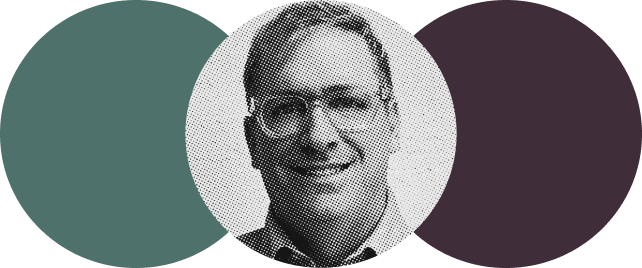
Ben Groenevelt Headshot

Ben Groenevelt

Fractional CTO​

Serious Technical Decisions Deserve More than Outside Advice

Embedded fractional CTO to streamline decisions, and optimize outcomes..
Not an external advisor. Part of your leadership team.

When Technical Decisions Carry Business Risk

Most companies don’t fall behind on technology. They fall behind on the decision to take it seriously. By the time the consequences show up – in slower cycles, lost deals, or a competitor who suddenly moves differently – the gap is already months old. You might recognize the moment it becomes real:

System-Wide Impact

A technology decision that starts in one department doesn’t stay there. When the choice affects how your teams operate, integrate, and scale – it deserves more than a departmental opinion.

AI Acceleration

Every vendor is leading with AI. Some of it is real. Most of it isn’t. When you can’t tell the difference, you’re either leaving value on the table or committing to something that won’t hold up.

Vendor Commitments

The proposal looks strong. The demo went well. But you’re signing a multi-year contract with a technology you don’t fully understand – and no one on your team has the experience to push back.

Technology Risk Becomes Visible

A system that worked fine at $3M starts creating problems at $10M. When technical decisions begin showing up in missed deadlines, compliance gaps, or customer complaints, the risk has already been there for a while.

When the consequences are significant, decisions deserve deliberate senior judgment.

light gray arrow

What Embedded Technical Leadership Means

  • A seat inside the leadership discussion – not a chair pulled up outside it
  • Every tradeoff is weighed against the full business context -not just the technical one.
  • Part of the work is knowing what to approve, what to delay – and what’s not worth pursuing at all.
  • Accountability doesn’t end when the decision is made – it carries forward.

Vendors sell. Agencies execute. Consultants recommend. My responsibility is to the business itself.

A Perspective Built Over Time

Over the past 20+ years, I’ve built companies, served on boards, and watched how technical decisions play out over time – sometimes creating leverage, sometimes quietly limiting it. Outside of my own ventures, I’ve always worked in roles where I ate what I killed. No salary to fall back on, no cushion if the judgment was wrong. That experience informs how I work. I’m not theorizing about what good judgment looks like. I’ve had to exercise it with my own name on the line.

moon triangle

Frequently Asked Questions

How do you work with an existing technical team?

As a complement, not a replacement. Most of my clients already have developers or a technical lead – my role is to work at the layer above them. I focus on decisions, priorities, and direction, not execution. Your team keeps doing what they’re doing. I make sure it’s pointed at the right problems.

Then you have a great foundation. A strong technical lead handles the how. What I bring is the what and the why – vendor strategy, architectural tradeoffs, board-level communication, and decisions that carry business consequences your technical lead shouldn’t have to own alone.

Advisory. I don’t write code, manage tickets, or run sprints. I work with leadership to make better technology decisions – and make sure the operational layer is set up to execute on them. If you need hands-on implementation, I can help you identify the right person for that.

There’s a phrase in racing that applies here: slow is smooth, and smooth is fast. The drivers who try to take every corner at full speed are the ones who spin out. Most delays in growing companies don’t come from moving too carefully – they come from reversing a bad decision. A vendor that didn’t scale. A platform that created more problems than it solved. A rebuild that consumed six months and set everything back. Slowing down at the decision point speeds everything up downstream.

If you need a full-time CTO in the office every day, I’m probably not it. I’m also not the right call if the business isn’t yet at a stage where technology decisions are carrying real consequences. My work is most valuable when the stakes are high enough that being wrong is expensive.

Every engagement starts with a discovery call – no pitch, just a direct conversation about where you are and what’s creating friction. If there’s a fit, we agree on a scope and I come in on a part-time basis, typically a defined number of hours or days per month. You get consistent access to senior-level thinking without the overhead of a full-time hire. Most clients use that time for a mix of ongoing strategic guidance, specific decisions that need a second opinion, and occasional deep-dives when something significant is on the table. Engagements are month-to-month. No long-term contracts, no retainer lock-in. If it’s working, we keep going. If your needs change, we adjust.

Notes on Decision Leadership

Ben Groenevelt

Fractional CTO​

Meet Ben

I’ve spent more than two decades working at the intersection of technology and business strategy, often in environments where decisions carried real financial and operational consequence.

I’m not drawn to technology for its novelty. I’m interested in how it shapes organizations over time – how systems create leverage, where complexity quietly accumulates, and how tradeoffs made under pressure play out years later.

There’s an old story about a technician called in to fix a failing system. He looks it over, flips one switch, and sends a $10,000 invoice. When asked to itemize it: “Flipping the switch – $1. Knowing which one to flip – $9,999.”

That’s a reasonable description of what I do.

The companies I work with don’t need more enthusiasm. They need clarity, restraint when appropriate, and someone willing to sit with the full weight of a decision before it’s made.

That’s the role I step into.

If you’re navigating decisions that carry real consequence, let’s talk.​